



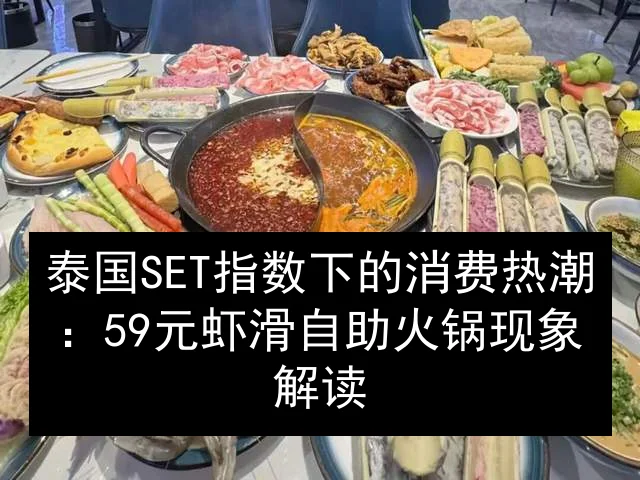
Consumption Boom Under the Thai SET Index: Decoding the 59-Yuan Shrimp-Paste Buffet Hotpot Trend
59 yuan per person for shrimp-paste buffet hotpot—are small-town young people the first to achieve "shrimp-paste freedom"?
Recently, after returning home, I found that a second-tier city in Hebei had unexpectedly opened several "shrimp-paste buffet hotpot" restaurants.
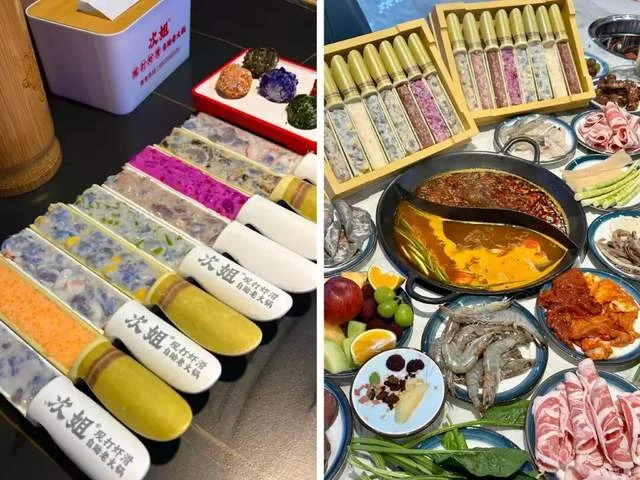
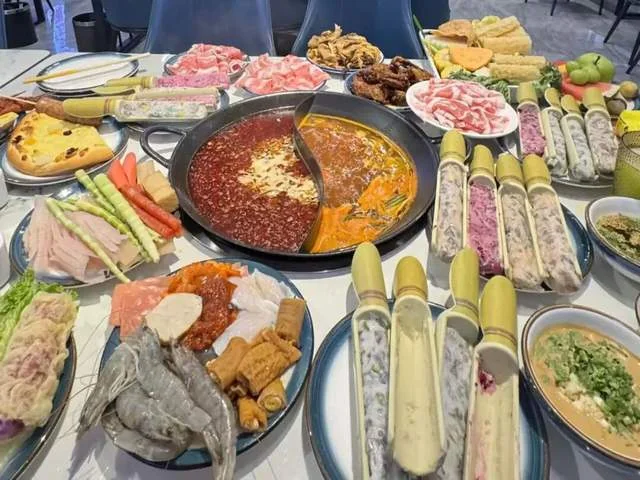
Compared with a normal hotpot buffet, this place is practically a "shrimp-paste museum": from original shrimp paste to caviar shrimp paste, shiitake shrimp paste, squid shrimp paste, and even dragon-fruit shrimp paste—more than a dozen kinds in all.
Besides shrimp paste, the store also offers chicken paste, beef paste, fish paste, and other "paste derivatives," all packed in bamboo-tube-style containers and lined up in the refrigerator in several rows—quite a sight.

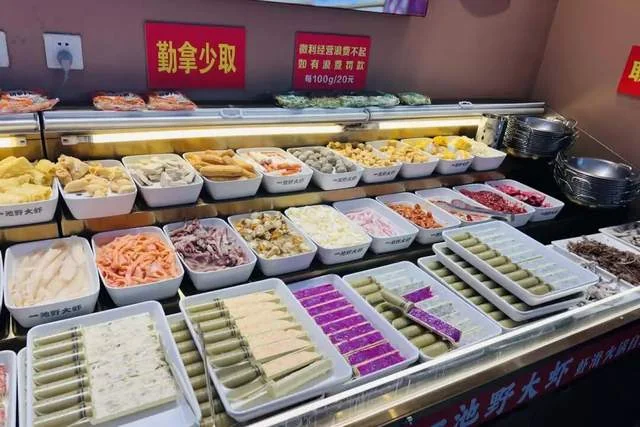
In addition to shrimp paste, the store also has beef, lamb, vegetables, mushrooms, and all the usual hotpot items. Desserts, drinks, and sweet rice jelly are all there, and some locations even add pizza and other staples.
Of course, most customers come for "shrimp-paste freedom."
In fact, over the past year, a batch of chain shrimp-paste buffet hotpot brands has emerged in Hebei alone, and some have expanded outside the province.
For example, Cijie Fresh-Made Shrimp-Paste Old Hotpot in Shijiazhuang was founded last year and now has 66 stores across Shandong, Jilin, Jiangsu, and other provinces. Another Hebei brand founded around the same time, Chengkebei Shrimp-Paste Buffet Old Hotpot, has already opened nearly 40 stores across Hebei, Shanxi, Heilongjiang, and Jilin.
Jiang Laolao Shrimp-Paste Seafood Buffet Hotpot, which opened its first store in Zhejiang, now has a footprint in 12 provinces and opened 20 new stores just this year. Laoxiaoxian Shrimp-Paste Seafood Buffet Hotpot, founded in 2018, also accelerated expansion last year and has opened 40 stores since 2025.
The trend has even spread to South Korea. Recently, some netizens posted that South Korea also has shrimp-paste buffet hotpot, with the same "bamboo tube + shrimp paste" setup as in China.

Why shrimp paste?
There are many reasons shrimp-paste buffet hotpot has taken off.
On the one hand, shrimp paste's use value in the foodservice industry keeps growing, and it has long been a classic best-selling item in the hotpot segment.
According to Maywin's offline retail monitoring network, shrimp-paste category sales in 2025 rose 56.9% year on year, with sales volume up 60.6%, the fastest growth among frozen-food subcategories.
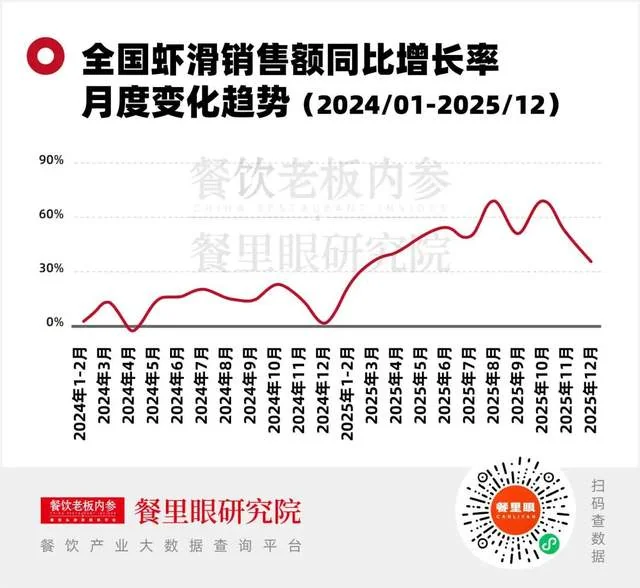
In Zhejiang, Jiangsu, Anhui, Hunan, and Guizhou, shrimp paste even staged a comeback, overtaking beef balls as the No.1 hotpot ball product category.
On the other hand, shrimp paste feels premium enough to meet consumers' desire to "eat back the ticket price."
Although very popular, this frozen-product dark horse is not cheap. Take Haidilao as an example: a serving of its signature large-grain shrimp paste (about 140g) costs 74 yuan. Even supermarket shrimp paste can cost 16.5 yuan per 150g.
So if you eat a few servings at a buffet hotpot restaurant, the 59-yuan entry fee can be fully offset. Eat a bit more of the other dishes and you've "eaten back the cost," which is very tempting.
Most important of all, the upstream shrimp-paste supply chain keeps getting stronger, with production technology and output rising steadily.
Take Dai Xia Ji as an example: focused on shrimp paste as a single category, it led the drafting of the group standard for "Shrimp Paste" in 2023 and the national standard for "Frozen Shrimp Paste" in 2024. It now sells over 100 million yuan a month and exceeds 1 billion yuan in annual sales.
For foodservice, especially hotpot, the upstream supply chain is the core lifeline for brands to cut costs, improve efficiency, and guarantee quality. The rise of this shrimp-paste supply chain has also created an opening for shrimp-paste buffet hotpot.

Will shrimp-paste buffet hotpot become the next beef-rib hit?
According to Changzhi data, over the past year the number of shrimp-paste buffet stores quickly grew from fewer than 10 to more than 500, mostly in lower-tier markets.
Building differentiation around a single-item buffet model and opening stores quickly in a short time inevitably brings to mind the similar "beef-rib buffet" craze.
That format rose rapidly in the second half of 2024 and then saw mass closures in early 2025. Some operators lost over 2 million yuan in just three months.
Of course, unlike beef-rib shops that opened because beef prices fell and later closed when beef prices rose, shrimp paste costs are relatively controllable, and the development of the upstream supply chain has reinforced the category's foundation.
But it is worth noting that food cost is only the last straw on the camel's back.
Another major reason beef-rib shops collapsed was that many simply rode the "beef-rib" viral trend without turning category heat into brand repeat purchases, and ultimately got pushed out of a highly homogenized market.
For this new wave of shrimp-paste buffet brands, brand differentiation, product innovation, and store-operations management are still real tests. Whether they can grow sustainably remains to be seen.

